Sustainability through smart devices: How tech is helping the planet?

Sustainability is no longer just a buzzword. It has become a global priority as people, businesses, and governments realize the urgent need to protect the environment. Climate change, pollution, and resource shortage are challenges that affect everyone. At the same time, technology is often seen as part of the problem. Devices consume energy, create electronic waste, and encourage overconsumption.
But technology can also be part of the solution. Smart devices are now helping us live more sustainably. From energy-saving appliances to connected sensors that monitor water usage, these devices are making everyday life more eco-friendly. This blog explains how smart devices are supporting sustainability, the benefits they bring, the challenges they face, and what the future looks like.
What are smart devices and why do they matter?
Smart devices are gadgets that connect to the internet and communicate with each other. They can collect data, learn from patterns, and automate tasks. Beyond convenience, they are now being used to reduce waste and conserve resources.
Examples include:
- Smart thermostats that adjust heating and cooling automatically.
- Smart lighting systems that switch off when rooms are empty.
- Connected appliances that use less energy and water.
- Sensors that detect leaks and monitor usage.
These devices matter because they help us make better choices without requiring constant effort.
How can you save energy with smart devices?
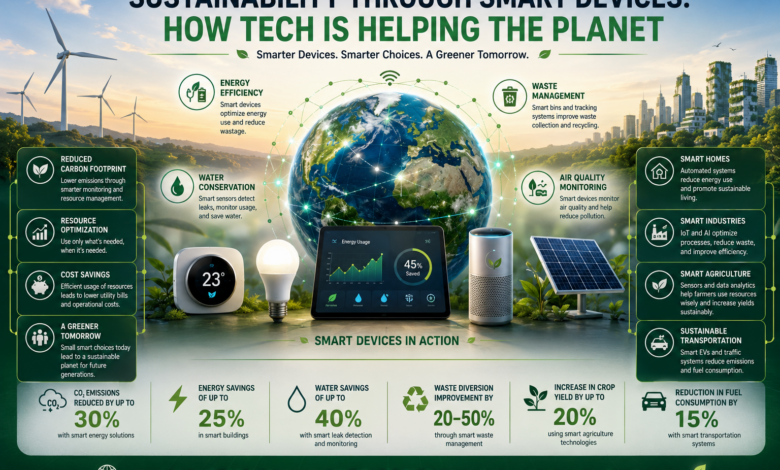
Energy use is one of the biggest contributors to climate change. Smart devices are helping households and businesses cut down on unnecessary consumption.
Smart thermostats: They learn your routine and adjust temperatures to avoid waste.
Smart lighting: LED bulbs connected to smart systems consume less power and turn off when not needed.
Smart grids: Utility companies use connected meters to balance supply and demand, reducing reliance on fossil fuels.
By using energy more efficiently, smart devices reduce greenhouse gas emissions and lower electricity bills.
How can you conserve water with smart devices?
Water scarcity is a growing problem worldwide. Smart devices are helping conserve this precious resource.
Smart irrigation systems: They water plants only when soil moisture is low, avoiding waste.
Leak detection sensors: These alert homeowners to leaks before they waste thousands of litres.
Smart faucets and showers: They track usage and encourage shorter showers or reduced flow.
In countries like India, where water shortages affect millions, these technologies can make a real difference.
How can we reduce waste through smart devices?
Smart devices also help reduce waste by encouraging efficient use of resources.
Smart refrigerators: They track food inventory and notify before items expire, reducing food waste.
Smart recycling systems: IoT-enabled bins can sort recyclable materials and provide data on waste generation.
Reducing waste not only saves money but also lowers pollution from landfills.
How can we have cleaner transportation with smart devices?
Transportation is a major source of carbon emissions. Smart technology is making mobility cleaner and smarter.
- Electric vehicles (EVs): Connected EVs optimize battery use and charging.
- Smart traffic systems: Sensors reduce congestion, lowering emissions from idling cars.
- Ride-sharing apps: Powered by smart technology, these reduce the number of vehicles on the road.
In the USA, smart transportation systems are already being tested in major cities. In India, EV adoption and connected mobility solutions are growing quickly.
How do smart homes support everyday sustainability?
Smart homes are becoming the center of Sustainability through smart devices living. By integrating devices, homeowners can monitor and control energy, water, and waste more effectively.
- Automated systems reduce unnecessary power usage.
- Smart appliances consume less energy and water.
- Connected platforms provide insights into household consumption patterns.
For example, a smart home in Delhi can lower electricity bills while also reducing carbon emissions.
How are businesses and industries using smart devices for sustainability?
Smart devices are not limited to households. Industries are using them to achieve sustainability goals.
- Smart factories: Sensors monitor machinery to reduce downtime and energy waste.
- Supply chain optimization: Connected devices track goods, reducing overproduction and transportation emissions.
- Green buildings: Smart systems manage lighting, heating, and cooling in commercial spaces.
These innovations help companies meet sustainability standards while improving efficiency.
What are the benefits of smart devices for sustainability?
- Lower carbon footprint through reduced energy and fuel use
- Cost savings for households and businesses
- A cleaner environment with less waste and pollution
- Scalable solutions that work for both small homes and large cities
What challenges do smart devices still face?
Smart devices are powerful tools, but they also face challenges:
- Electronic waste: Producing and disposing of devices can create pollution.
- Data privacy: Devices collect large amounts of data, raising privacy concerns.
- High costs: Smart technology can be expensive to install.
- Digital divide: Rural areas may not have access to advanced systems.
Solving these challenges requires cooperation between governments, businesses, and consumers.
How are India and the USA using smart devices for sustainability?
India
India’s rapid urbanization makes sustainability a pressing issue. Smart devices are helping bridge the gap between resource demand and supply. Initiatives like smart cities and renewable energy integration are driving adoption.
USA
The United States is leading in smart technology innovation. From smart grids to connected EVs, the country is using technology to reduce emissions and promote Sustainability through smart devices. Businesses are also investing heavily in green technology to meet consumer and regulatory demands.
What does the future of smart sustainability look like?
The future looks promising. Some upcoming trends include:
- AI integration: Devices will predict and prevent waste before it happens.
- Blockchain transparency: Ensuring sustainable practices in supply chains.
- Smart cities: Urban areas will be managed through connected systems, reducing pollution.
- Personalized sustainability: Devices will provide tailored recommendations for individuals.
Conclusion
Smart devices are no longer just tools of convenience. They are becoming essential instruments of sustainability. From reducing energy use and conserving water to cutting waste and transforming transportation, technology is helping us protect the planet.
India and the USA are at the forefront of this transformation. As adoption grows, smart devices will play a critical role in shaping a greener, more sustainable future. By embracing smart technology responsibly, we can move toward a world where innovation and sustainability work together.
FAQs about smart devices and sustainability
Q1. How do smart devices actually help the environment?
Ans: Smart devices reduce waste, save energy, and conserve water by using resources more efficiently. For example, smart thermostats lower electricity use, and leak sensors prevent water loss.
Q2. Are smart devices expensive to install?
Ans: Some smart devices can be costly at first, but they usually save money in the long run by lowering utility bills. Over time, the savings often outweigh the initial investment.
Q3. Can smart devices work in rural areas?
Ans: Yes, but access may be limited in places with poor internet connectivity. As networks expand, rural areas will benefit more from smart technology.
Q4. Do smart devices create electronic waste?
Ans: Like all electronics, smart devices can add to e-waste if not recycled properly. The good news is that many companies are now offering recycling programs to reduce this impact.
Q5. How do smart homes contribute to sustainability?
Ans: Smart homes use connected devices to manage energy, water, and waste. Automated systems make sure lights, appliances, and heating are only used when needed, reducing unnecessary consumption.
Q6. What is the future of sustainability with smart devices?
Ans: The future looks promising. Smart cities, AI-powered devices, and eco-friendly innovations will make it easier for people to live sustainably while enjoying modern conveniences.
For more information visit on our website : Dolphin Techknology