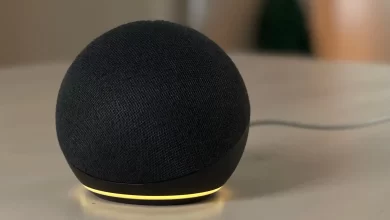
Voice Assistants & Beyond: The Evolution of Human-Device Interaction

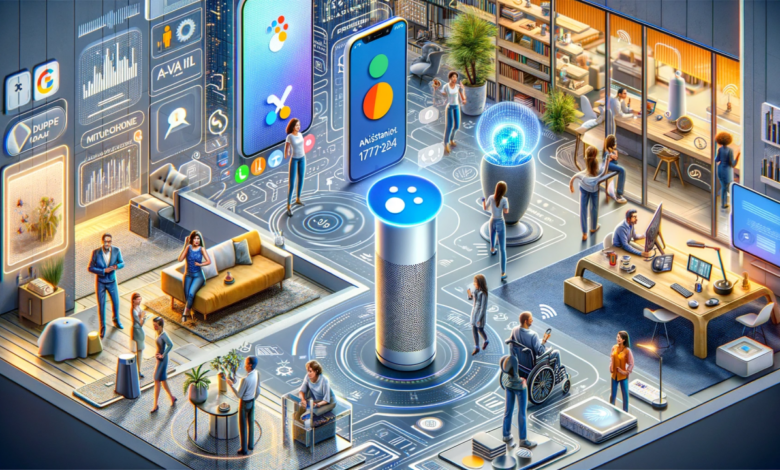
Voice assistants have become a common part of our lives. What started as a simple feature on your smartphones has now turned into a new way to interact with technology. Now, you can ask your phone for directions, tell your speaker to play music, or ask your smart TV to change the channel, all without using your hands.
In the last decade, the way we interact with devices has changed more than it did in the past fifty years. As our lives get more digital, voice assistants and smart systems help us complete everyday tasks faster and easier.
The blog will explain how voice assistants work, why they are becoming popular, how our interaction with devices is changing, and what the future may look like.
What are voice assistants and why are they important?
Voice assistants are digital tools that understand your spoken commands and carry out tasks for you. They use technology like artificial intelligence and natural language processing to figure out what you are saying.
Common examples of the voice assistants are:
- Siri on Apple devices
- Google Assistant on Android and smart home products
- Alexa on Amazon Echo speakers
- Cortana and other business assistants
These voice assistants are important because they make using technology feel more natural. Instead of typing or searching through menus, you can just speak and get things done.
How did your voice assistants change human-device interaction?
In the early days of computers, users had to rely on commands, manuals, and a lot of patience. Interacting with computers felt slow and mechanical. Today, devices act more like conversation partners.
Here are some of the biggest changes:
Hands-free operation:
You can ask for weather updates, reminders, or messages even when your hands are busy.
Faster access to information:
Voice search means you don’t have to type at all, which helps your seniors or people with some disabilities.
Personalized responses:
Your voice assistants learn from your habits, schedule, and preferences.
Natural communication:
Speaking is the easiest way to interact, making technology feel more friendly.
This shift has made technology blend into everyday life instead of interrupting it.
How do voice assistants work behind the scenes?
Using a voice assistant like Google or Alexa is simple, but a lot is going on behind the scenes. When you say “Hey Google” or “Hey Alexa or Alexa,” your device does the following:
- It detects the wake word.
- It records your voice command.
- It processes the audio using AI.
- It understands what you want.
- It performs the task or gives you an answer.
This whole process happens in seconds, but it relies on advanced cloud computing, deep learning, and large amounts of data.
Where are voice assistants being used today?
Voice assistants are now common in homes and workplaces, and their uses are growing.
At home, you can use them to:
- Turn lights on or off
- Control fans and air conditioning
- Play music and movies
- Set alarms and reminders
In vehicles, you can get help with:
- Navigation
- Hand-free calls
- Voice-controlled entertainment
In the office, you can make tasks easier by:
- Scheduling meetings
- Searching for documents
- Automating repetitive tasks
In healthcare, you get:
- Voice-guided support for patients
- Contactless operations
- Medicine reminders
India and the USA are two of the largest markets for voice-enabled devices. This growth is fueled by the rise in smartphone use and the development of smart home systems.
How are voice assistants moving beyond simple commands?
The next generation of assistants will be more helpful and easier to talk to. They will provide you with benefits by:
Understanding natural conversations:
People can speak casually instead of using robotic commands.
For example: “Can you remind me about my meeting after lunch?”
Handling multiple-step tasks:
Voice assistants can plan routes, book appointments, and manage routines.
Recognizing emotions:
Some advanced systems can change their responses based on the user’s tone.
Multilingual support:
In India, voice assistants can switch between English and your local languages in the same sentence.
These upgrades will make your devices feel more like helpful companions instead of just tools.
What comes after voice assistants and the future of human-device interaction?
Voice is just one part of how we interact with technology. New tools are also changing how we connect with our devices.
Gesture control
Your devices will respond to our hand movements, body posture, and where we look.
Augmented reality (AR)
You will see digital elements overlaid in real-world environments.
Predictive assistance
Your devices will anticipate our needs, like lowering the temperature before bedtime.
Ambient intelligence
Your homes, offices, and cars will work together as a connected environment.
Emotion-aware interfaces
Your systems will change based on our stress, mood, or energy levels.
These innovations aim to make technology fit into our lives so smoothly that we hardly notice it.
What challenges do voice assistants still face?
Your Voice-assisted technology has made significant progress, but it still faces limitations. Below are some challenges that your voice assistants still face:
Privacy concerns:
People are worried that these devices may listen too much.
Misinterpretation:
Accents, background noise, and unclear speech can lead to mistakes.
Internet dependency:
Most voice assistants need a stable internet connection to work.
Data security:
Some companies must prioritize protecting user information.
Accessibility gaps:
Some areas do not have the infrastructure for advanced features. Addressing these challenges is essential for broader use.
Conclusion
Your voice assistants have changed how we interact with technology. Some tasks that are used to require keyboards and screens can now be done with simple voice commands. As AI improves, your devices are becoming smarter and easier to talk to.
This transformation goes beyond just voice commands. The future includes gesture control, smart predictions, augmented reality, and devices that understand our emotions. Human-device interaction is moving toward a world where technology feels natural, effortless, and personalized, which makes our lives easier and more connected than ever.
FAQs
Q1: What is a voice assistant?
Ans: A voice assistant is a digital tool that listens to your commands that you speak and carries out tasks like searching, setting reminders, or controlling smart devices.
Q2: How do my voice assistants help me in daily life?
Ans: Your voice assistants will make your everyday tasks easier by checking the weather, playing music, answering questions, and managing smart home devices.
Q3: Is my voice assistant safe to use?
Ans: Yes, most voice assistants are safe to use, but you should always check your privacy settings before and ensure your devices are from trusted brands or not.
Q4: Why does my voice assistant sometimes misunderstand my commands?
Ans: Your voice assistant can sometimes misunderstand your commands due to noise, accents, unclear speech, or background sounds that can make your command less accurate. The technology is improving, but it is not perfect yet.
Q5: Can my voice assistant work in regional languages?
Ans: Yes, many voice assistants support different languages and can understand mixed languages in India.
Q6: What is the future of voice technology?
Ans: Future voice systems will be more conversational, aware of emotions, proactive, and integrated with smart homes, cars, and workplaces.
For more information visit on our website : Dolphin Techknology